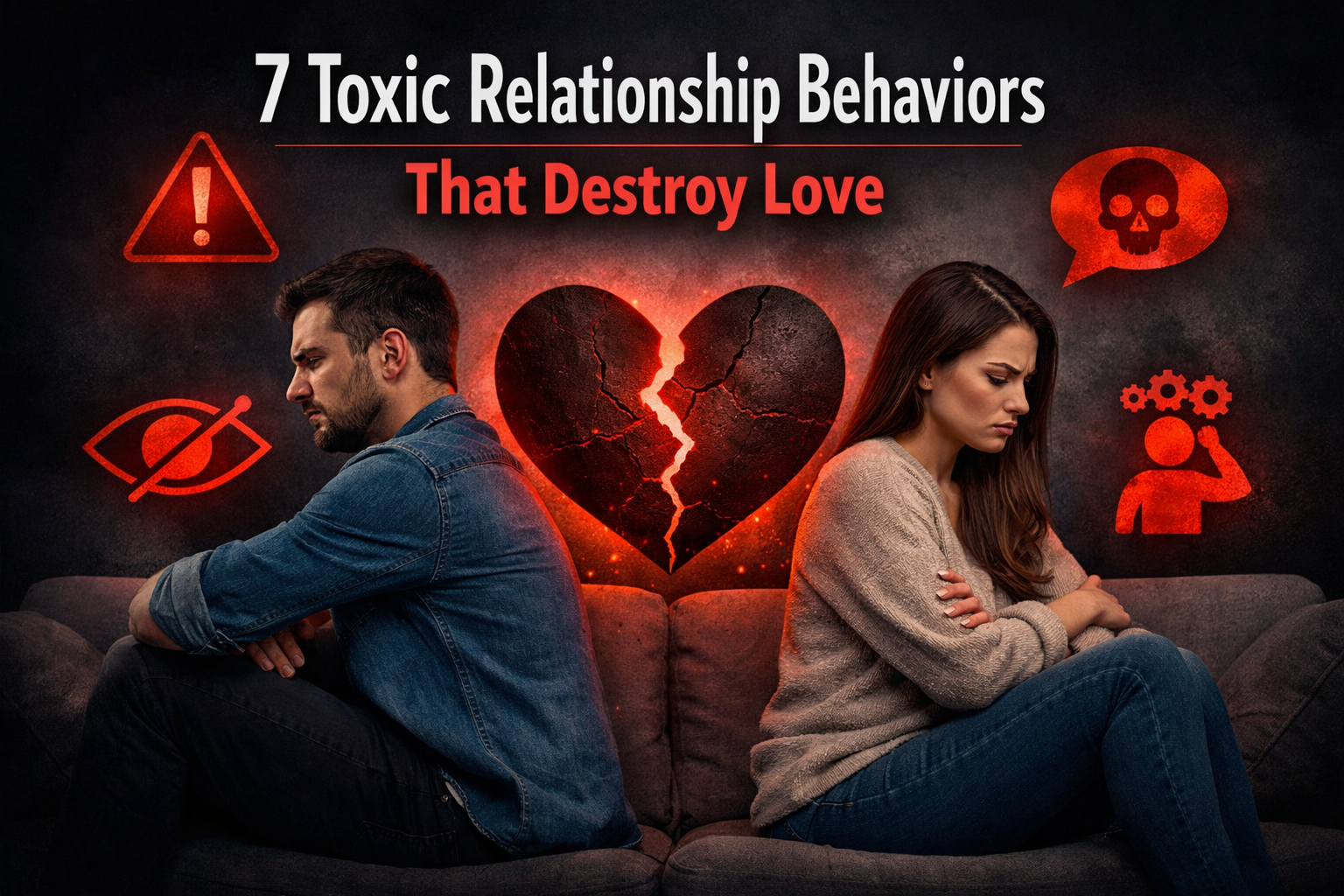
7 Toxic Relationship Behaviors That Destroy Love (And How to Stop Them)
Love is one of the most powerful human experiences. It brings joy, comfort, connection, and emotional support. However, even the strongest relationships can slowly deteriorate when unhealthy patterns begin to develop.
Many relationships don’t end because love disappears. Instead, they break down because of repeated toxic relationship behaviors that erode trust, respect, and emotional safety over time.
The most dangerous part is that these behaviors often start subtly. What begins as a small habit or occasional mistake can gradually turn into a damaging pattern that destroys intimacy.
Understanding these toxic patterns is the first step toward preventing them. When couples learn to recognize unhealthy behaviors early, they can replace them with healthier habits that strengthen their relationship.
In this comprehensive guide, we will explore the 7 toxic relationship behaviors that destroy love, how they impact relationships, and practical strategies couples can use to build stronger, healthier connections.
What Makes a Relationship Toxic?
A toxic relationship is one where unhealthy behaviors repeatedly harm the emotional well-being of one or both partners. Instead of providing support and comfort, the relationship becomes a source of stress, anxiety, and emotional pain.
Toxic relationships are often characterized by patterns such as manipulation, disrespect, lack of communication, jealousy, or control.
While every relationship experiences conflict from time to time, toxic patterns are different because they become consistent and damaging.
Healthy relationships are built on:
- Mutual respect
- Trust and honesty
- Open communication
- Emotional safety
- Support and understanding
When these elements disappear, toxic behaviors can quickly replace them.
1. Constant Criticism
Criticism is one of the most common toxic behaviors that destroy relationships. While constructive feedback can help partners grow, constant criticism attacks a person’s identity rather than addressing specific issues.
For example, saying “You forgot our dinner plans, and that hurt my feelings” is healthy communication. However, saying “You never care about anything” turns the conversation into a personal attack.
Over time, constant criticism can severely damage a partner’s self-esteem and create emotional distance.
Why Constant Criticism Is Dangerous
When someone feels constantly judged or attacked, they may begin to withdraw emotionally. This leads to resentment, defensiveness, and breakdown in communication.
Eventually, the relationship begins to feel like a place of judgment rather than a place of love.
How to Fix This Behavior
- Focus on specific actions instead of attacking character
- Use calm and respectful language
- Practice appreciation for your partner’s efforts
Healthy feedback should aim to solve problems, not tear someone down.
2. Poor Communication
Communication is the backbone of every successful relationship. Without it, misunderstandings and emotional distance quickly develop.
Many couples struggle with communication because they avoid difficult conversations or fail to listen to each other.
When communication breaks down, partners may begin making assumptions, which often leads to conflict.
Signs of Poor Communication
- Avoiding important discussions
- Interrupting or dismissing your partner’s feelings
- Using silence as punishment
- Constant misunderstandings
How to Improve Communication
Healthy communication involves both speaking honestly and listening actively. Couples should aim to create a safe space where both partners feel comfortable expressing their thoughts.
Listening without immediately reacting can significantly improve understanding.
3. Controlling Behavior
Control is another toxic behavior that can destroy relationships. A controlling partner attempts to dominate decisions, restrict freedom, or manipulate situations to maintain power.
Control may appear in subtle ways at first, such as monitoring phone activity or questioning friendships.
Over time, however, these behaviors can create an unhealthy imbalance of power.
Examples of Controlling Behavior
- Checking your partner’s phone or messages
- Telling your partner what they can wear
- Discouraging friendships
- Making decisions without your partner’s input
Why Control Destroys Love
Healthy relationships require independence and trust. When one partner feels controlled, resentment and emotional distance grow quickly.
Respecting personal boundaries is essential for maintaining a healthy partnership.
4. Emotional Manipulation
Emotional manipulation occurs when one partner uses guilt, fear, or pressure to influence the other person’s decisions or behavior.
This toxic pattern can be extremely damaging because it often leaves the victim feeling confused or responsible for problems they didn’t create.
Manipulation can be subtle, making it difficult to recognize.
Common Manipulation Tactics
- Guilt-tripping
- Playing the victim constantly
- Threatening to leave during arguments
- Twisting facts to avoid responsibility
How to Address Emotional Manipulation
Healthy relationships require honesty and accountability. Both partners must take responsibility for their actions and communicate openly without using emotional pressure.
5. Lack of Trust
Trust is one of the most important foundations of any relationship. Without trust, insecurity and suspicion can quickly take over.
When trust is damaged, partners may begin questioning each other’s honesty or loyalty.
This constant doubt creates emotional exhaustion and conflict.
Signs of Trust Issues
- Constantly checking your partner’s phone
- Accusing your partner without evidence
- Feeling anxious when your partner spends time with others
Rebuilding Trust
Trust can be rebuilt, but it requires consistent honesty, transparency, and patience from both partners.
Trust grows slowly but can be destroyed quickly, which is why protecting it is essential.
6. Keeping Score
Some couples treat relationships like competitions. They constantly keep track of who did more or who made the last mistake.
This mindset turns the relationship into a scoreboard rather than a partnership.
Healthy relationships focus on teamwork rather than winning arguments.
Examples of Scorekeeping
- Bringing up past mistakes repeatedly
- Comparing efforts constantly
- Expecting rewards for acts of kindness
How to Stop Scorekeeping
Partners should focus on supporting each other rather than measuring contributions.
Acts of love should come from care, not obligation.
7. Disrespect and Name-Calling
Respect is the foundation of love. Once disrespect enters the relationship, emotional damage quickly follows.
Name-calling, sarcasm, insults, and belittling behavior can destroy a partner’s self-worth.
Even during arguments, respectful communication should always remain.
Examples of Disrespect
- Calling your partner insulting names
- Mocking their feelings
- Embarrassing them in front of others
How to Restore Respect
Couples should commit to respectful communication, even during disagreements.
Taking a break during heated arguments can prevent hurtful words that cannot be taken back.
How Toxic Behaviors Slowly Destroy Love
Toxic behaviors rarely destroy relationships overnight. Instead, they slowly chip away at the emotional connection between partners.
Over time, small negative habits grow into larger issues that create resentment and emotional distance.
This is why addressing toxic patterns early is crucial for maintaining a healthy relationship.
How to Build a Healthy Relationship Instead
Healthy relationships require effort from both partners. Instead of focusing on blame, couples should focus on growth and understanding.
Here are some habits that help relationships thrive:
- Practice honest communication
- Show appreciation regularly
- Respect personal boundaries
- Resolve conflicts calmly
- Support each other’s goals
- Spend quality time together
These simple habits create emotional safety and strengthen trust between partners.
When It May Be Time to Seek Help
Sometimes toxic behaviors become deeply rooted in a relationship. In these situations, professional guidance from a therapist or relationship counselor can be extremely helpful.
Seeking help is not a sign of failure. Instead, it shows a willingness to improve the relationship and work toward healthier patterns.
Final Thoughts
Every relationship faces challenges, but repeated toxic relationship behaviors can slowly destroy even the deepest love.
The good news is that most unhealthy patterns can be changed when both partners are willing to recognize them and make improvements.
By focusing on respect, communication, trust, and empathy, couples can transform their relationship into a stronger and healthier partnership.
Love thrives when both partners feel valued, understood, and emotionally safe.
For more tips on toxic relationships behaviors, check our relationship category Relationship category.
Have any thoughts?
Share your reaction or leave a quick response — we’d love to hear what you think!
-
 2
2
-
 0
0
-
 0
0
-
 0
0
-
 0
0
-
 0
0