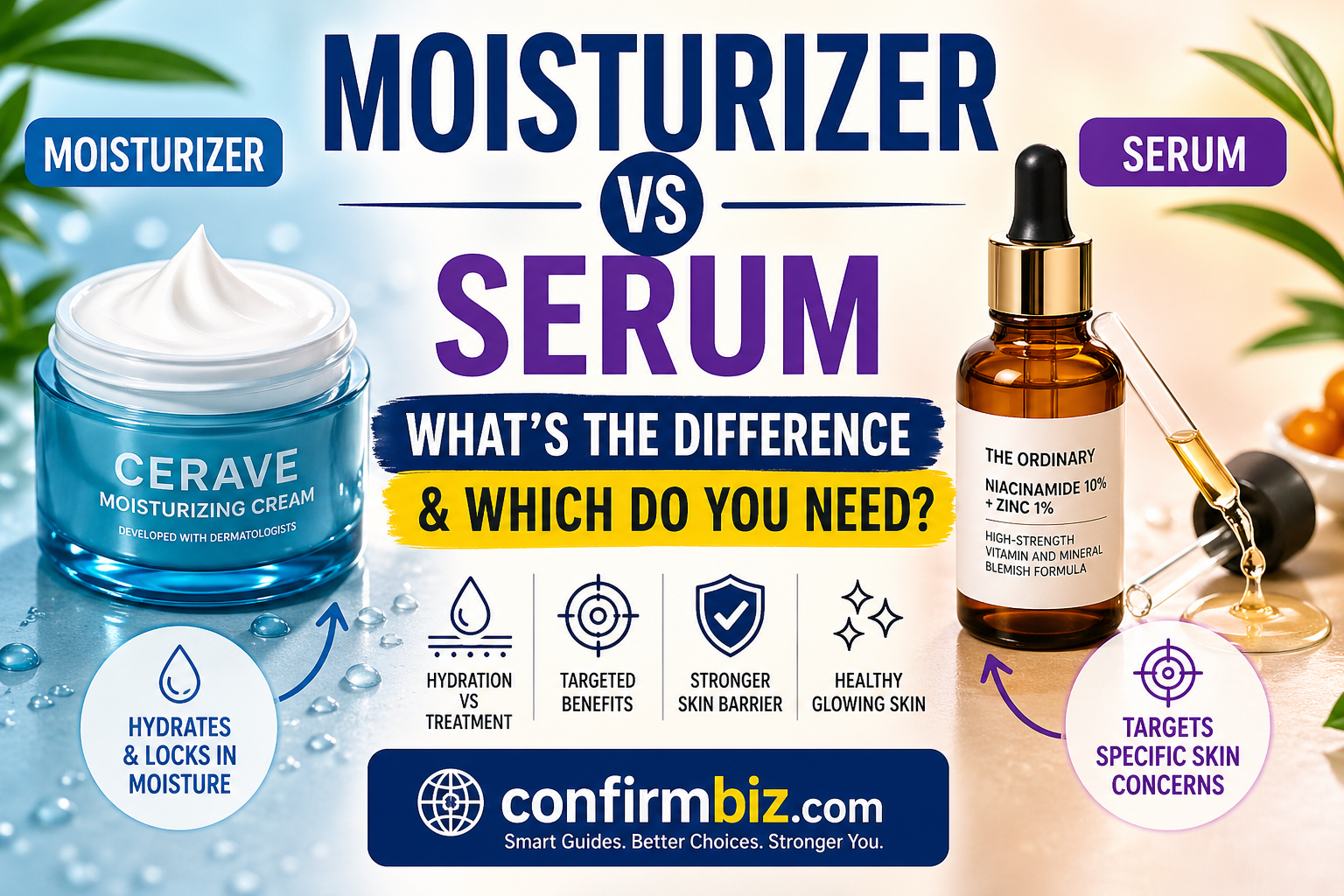
Beauty & Skincare Moisturizer vs Serum: What’s the Difference & Which Do You Need? by mario April 27, 2026 written by mario April 27, 2026 Bookmark 90 Moisturizer vs Serum: What’s the Difference & Which Do You Need? Introduction Whether you’re just starting your skincare journey or fine-tuning your daily ritual, one question always pops up — what’s the real difference between a serum and a moisturizer? These two essentials often get confused, but each plays a unique role in achieving radiant, balanced skin. Think of your serum as a treatment shot and your moisturizer as your daily shield. Together, they’re a powerhouse duo for healthy skin that glows from within. Full Detail Comparison Table Feature Serum Moisturizer Primary Function Delivers high concentrations of active ingredients to target specific issues like wrinkles, dullness, or uneven tone. Hydrates and protects the skin barrier to lock in moisture and nutrients. Texture Lightweight, thin, and fast-absorbing (often gel or liquid). Thicker, creamier, or gel-based, depending on formulation. Penetration Deeper layers of the skin (epidermis). Mainly the outermost layer (stratum corneum). Main Ingredients Vitamin C, Hyaluronic Acid, Niacinamide, Retinol, Peptides. Humectants, Emollients, Occlusives (e.g., ceramides, squalane, glycerin). When to Apply After cleansing and toning, before moisturizer. After serum application, before sunscreen. Tools Overview In skincare, “tools” refer to these fundamental steps: Cleansers: Remove dirt and prep the skin. Serums: Treat and target specific concerns. Moisturizers: Lock in hydration and protect the barrier. Sunscreens: Defend against UV damage. Head-to-Head Comparison A serum is your active ingredient powerhouse — think of it as your skin’s personal trainer, working deep to encourage cellular repair and rejuvenation. Meanwhile, a moisturizer is your bodyguard, sealing in hydration and forming a barrier that keeps environmental stress at bay. Key Features Serum: Lightweight consistency, fast absorption, targeted actives for visible results. Moisturizer: Nourishing and protective, balances hydration and prevents water loss. Pros and Cons Serum Pros: Deep penetration, targeted treatment, lightweight feel. Cons: Can irritate sensitive skin if used without a moisturizer; more expensive per ounce. Moisturizer Pros: Essential hydration, barrier protection, soothes the skin. Cons: May clog pores if heavy or mismatched with skin type. Pricing Overview Serums: Typically range from $20–$150+ depending on actives and brand (e.g., Vitamin C, retinol formulations). Moisturizers: Range from $10–$200+ depending on formula richness and brand reputation. Who Should Use It? Serum: Ideal for those wanting targeted results — brightening, anti-aging, acne control, or hydration boost. Moisturizer: Must-have for all skin types to maintain the skin’s moisture barrier and prevent dehydration. Product Recommendations Top Serums Estée Lauder Advanced Night Repair Serum – Boosts radiance and reduces signs of aging. Lancôme Advanced Génifique Serum – Enhances glow and firms the skin. The Ordinary Hyaluronic Acid 2% + B5 – Affordable hydration with simple ingredients. Top Moisturizers La Mer Crème de la Mer – Luxurious hydration with sea-sourced actives. CeraVe Moisturizing Cream – Dermatologist-recommended daily moisturizer with ceramides and hyaluronic acid. Clinique Moisture Surge 100H Auto-Replenishing Hydrator – Lightweight gel for deep, long-lasting hydration. Final Verdict Serums treat, moisturizers protect. If you’re serious about healthy, glowing skin, the secret isn’t choosing one — it’s combining both in the right order. Apply your serum first to deliver potent actives, then follow up with a moisturizer to seal those benefits in. For beginners, start simple: a hydrating hyaluronic acid serum under a gentle, non-comedogenic moisturizer. As you get comfortable, add targeted serums like Vitamin C (for brightness) or retinol (for aging) to up your results. For more tips on moisturizer vs serum, beauty and skincare products and recommendation, check out our beauty and skincare category Click here to read more. FAQ 1. Do I need both a serum and a moisturizer? Yes. Serums penetrate deeply to treat, while moisturizers create a barrier to lock in moisture and protect. 2. Which one should I apply first? Always apply serum first, then moisturizer. This ensures that the actives work effectively before being sealed in. 3. Can I skip moisturizer if I have oily skin? No. Even oily skin needs hydration — use a lightweight, oil-free gel moisturizer. 4. How often should I use a serum? Once or twice a day, depending on the serum type and your skin’s tolerance. Always follow with sunscreen in the morning. 1 Have any thoughts? Share your reaction or leave a quick response — we’d love to hear what you think! 0 0 0 0 0 0 beauty routineface caremoisturizerserumskincareskincare tips 0 comments FacebookTwitterPinterestEmail mario Following Author previous post Air Fryer vs Deep Fryer: Which Is Healthier? (Ultimate 2026 Guide) Leave a Comment Cancel Reply Save my name, email, and website in this browser for the next time I comment. Δ

Moisturizer vs Serum: What’s the Difference & Which Do You Need? Introduction Whether you’re just starting your skincare journey or fine-tuning your daily ritual, one question always pops up — what’s the real difference between a serum and a moisturizer? These two essentials often get confused, but each plays a unique role in achieving radiant, balanced skin. Think of your serum as a treatment shot and your moisturizer as your daily shield. Together, they’re a powerhouse duo for healthy skin that glows from within. Full Detail Comparison Table Feature Serum Moisturizer Primary Function Delivers high concentrations of active ingredients to target specific issues like wrinkles, dullness, or uneven tone. Hydrates and protects the skin barrier to lock in moisture and nutrients. Texture Lightweight, thin, and fast-absorbing (often gel or liquid). Thicker, creamier, or gel-based, depending on formulation. Penetration Deeper layers of the skin (epidermis). Mainly the outermost layer (stratum corneum). Main Ingredients Vitamin C, Hyaluronic Acid, Niacinamide, Retinol, Peptides. Humectants, Emollients, Occlusives (e.g., ceramides, squalane, glycerin). When to Apply After cleansing and toning, before moisturizer. After serum application, before sunscreen. Tools Overview In skincare, “tools” refer to these fundamental steps: Cleansers: Remove dirt and prep the skin. Serums: Treat and target specific concerns. Moisturizers: Lock in hydration and protect the barrier. Sunscreens: Defend against UV damage. Head-to-Head Comparison A serum is your active ingredient powerhouse — think of it as your skin’s personal trainer, working deep to encourage cellular repair and rejuvenation. Meanwhile, a moisturizer is your bodyguard, sealing in hydration and forming a barrier that keeps environmental stress at bay. Key Features Serum: Lightweight consistency, fast absorption, targeted actives for visible results. Moisturizer: Nourishing and protective, balances hydration and prevents water loss. Pros and Cons Serum Pros: Deep penetration, targeted treatment, lightweight feel. Cons: Can irritate sensitive skin if used without a moisturizer; more expensive per ounce. Moisturizer Pros: Essential hydration, barrier protection, soothes the skin. Cons: May clog pores if heavy or mismatched with skin type. Pricing Overview Serums: Typically range from $20–$150+ depending on actives and brand (e.g., Vitamin C, retinol formulations). Moisturizers: Range from $10–$200+ depending on formula richness and brand reputation. Who Should Use It? Serum: Ideal for those wanting targeted results — brightening, anti-aging, acne control, or hydration boost. Moisturizer: Must-have for all skin types to maintain the skin’s moisture barrier and prevent dehydration. Product Recommendations Top Serums Estée Lauder Advanced Night Repair Serum – Boosts radiance and reduces signs of aging. Lancôme Advanced Génifique Serum – Enhances glow and firms the skin. The Ordinary Hyaluronic Acid 2% + B5 – Affordable hydration with simple ingredients. Top Moisturizers La Mer Crème de la Mer – Luxurious hydration with sea-sourced actives. CeraVe Moisturizing Cream – Dermatologist-recommended daily moisturizer with ceramides and hyaluronic acid. Clinique Moisture Surge 100H Auto-Replenishing Hydrator – Lightweight gel for deep, long-lasting hydration. Final Verdict Serums treat, moisturizers protect. If you’re serious about healthy, glowing skin, the secret isn’t choosing one — it’s combining both in the right order. Apply your serum first to deliver potent actives, then follow up with a moisturizer to seal those benefits in. For beginners, start simple: a hydrating hyaluronic acid serum under a gentle, non-comedogenic moisturizer. As you get comfortable, add targeted serums like Vitamin C (for brightness) or retinol (for aging) to up your results. For more tips on moisturizer vs serum, beauty and skincare products and recommendation, check out our beauty and skincare category Click here to read more. FAQ 1. Do I need both a serum and a moisturizer? Yes. Serums penetrate deeply to treat, while moisturizers create a barrier to lock in moisture and protect. 2. Which one should I apply first? Always apply serum first, then moisturizer. This ensures that the actives work effectively before being sealed in. 3. Can I skip moisturizer if I have oily skin? No. Even oily skin needs hydration — use a lightweight, oil-free gel moisturizer. 4. How often should I use a serum? Once or twice a day, depending on the serum type and your skin’s tolerance. Always follow with sunscreen in the morning.