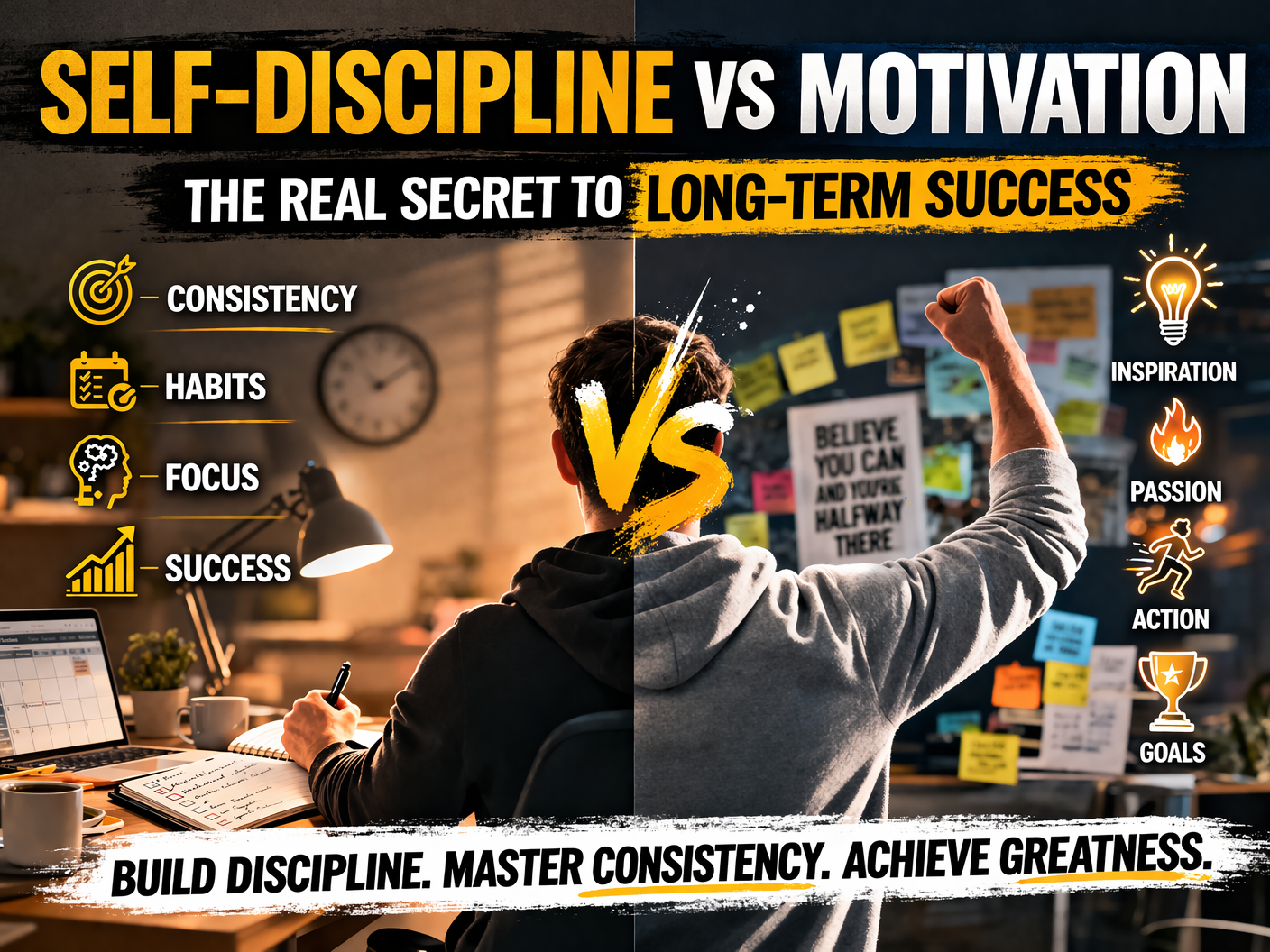
Self-Discipline vs Motivation: The Ultimate Guide to Achieving Long-Term Success
In today’s fast-paced world, everyone is searching for the secret to success. Whether it’s building a profitable online business, staying consistent with your goals, or improving your personal life, one question always comes up:
What matters more — self-discipline or motivation?
At first glance, motivation seems like the key driver. After all, it’s that powerful feeling that gets you excited to start something new. But here’s the reality most people don’t realize:
Motivation gets you started, but self-discipline is what keeps you going.
If you rely only on motivation, you will struggle with consistency. If you build self-discipline, you can achieve almost anything — regardless of how you feel.
In this comprehensive guide, we’ll break down everything you need to know about self-discipline vs motivation, including their differences, why discipline is more important, and how you can build it step by step.
Understanding Motivation
Motivation is the emotional drive that pushes you to take action. It is often triggered by inspiration, excitement, fear, or external rewards. Motivation is what makes you say, “I’m going to change my life starting today.”
Types of Motivation
There are two main types of motivation:
- Intrinsic Motivation: Comes from within (passion, purpose, personal satisfaction)
- Extrinsic Motivation: Comes from external rewards (money, recognition, praise)
Both types can be powerful, but they share one major weakness — they don’t last forever.
Why Motivation Fades Quickly
Have you ever felt extremely motivated one day, only to lose that energy the next? That’s because motivation is tied to emotions, and emotions constantly change.
- Your mood changes
- You get tired
- Life challenges appear
- Distractions take over
This is why many people start projects but never finish them. They depend on motivation instead of building a system.
Understanding Self-Discipline
Self-discipline is the ability to take action regardless of how you feel. It is the habit of doing what needs to be done, even when you don’t feel like doing it.
Unlike motivation, self-discipline is not based on emotions. It is based on commitment, routine, and long-term vision.
Characteristics of Self-Discipline
- Consistency over time
- Control over impulses
- Focus on long-term results
- Ability to delay gratification
A disciplined person doesn’t wait to “feel ready.” They act anyway.
Self-Discipline vs Motivation: A Deep Comparison
| Motivation | Self-Discipline |
|---|---|
| Emotion-based | Habit-based |
| Temporary | Long-lasting |
| Unpredictable | Reliable |
| Starts action | Sustains action |
| Depends on mood | Independent of mood |
Why Self-Discipline is the Real Game Changer
If you study highly successful people, you’ll notice one thing: they don’t rely on motivation. They rely on systems and habits.
Discipline creates consistency, and consistency creates results.
1. Discipline Builds Momentum
When you take action daily, even in small amounts, you build momentum. Over time, this momentum leads to massive results.
2. Discipline Eliminates Excuses
Motivation says, “I’ll do it when I feel like it.”
Discipline says, “I’ll do it because it must be done.”
3. Discipline Creates Freedom
Ironically, discipline leads to freedom. When you build strong habits, you gain control over your time, finances, and future.
Real-Life Example: Blogging Success
Let’s bring this closer to your reality as a blogger.
- Blogger A: Writes only when motivated
- Blogger B: Writes consistently every day
After one year:
- Blogger A has a few posts with no traffic
- Blogger B has hundreds of posts, SEO rankings, and income
The difference is not talent — it’s discipline.
The Science Behind Discipline
Self-discipline is closely linked to habit formation and brain function. When you repeat an action consistently, your brain creates neural pathways that make the behavior automatic.
This means that over time, discipline becomes easier.
What feels hard today can become effortless tomorrow — if you stay consistent.
How to Build Self-Discipline (Step-by-Step Guide)
1. Start Small
Don’t try to change your entire life overnight. Start with small, manageable actions.
Example: Write for 30 minutes daily instead of aiming for 5 hours.
2. Create a Clear Routine
A routine removes decision-making. When you have a fixed schedule, you don’t waste time thinking about whether to act.
3. Use the “No Excuses” Rule
Make a personal rule: no matter what happens, you show up.
Even if you perform at 50%, consistency matters more than perfection.
4. Eliminate Distractions
Distractions are the biggest enemy of discipline. Identify what wastes your time and reduce it.
- Limit social media
- Turn off notifications
- Create a focused workspace
We’ve broken this down step-by-step in this article Digital Detox for Mental Clarity: The Ultimate Guide to Reclaim Focus, Reduce Stress, and Boost Productivity Click here to read more.
5. Track Your Progress
Tracking keeps you accountable. When you see your progress, you become more motivated to continue.
6. Build Habits, Not Goals
Goals are important, but habits are what get you there.
Focus on daily actions instead of just outcomes.
To fully understand this concept, check out our detailed post on Modern Lifestyle Improvement: 15 Powerful Ways to Transform Your Life Click here to read more.
How to Use Motivation Effectively
Motivation is not useless — it just needs to be used correctly.
Use Motivation To:
- Start new projects
- Set clear goals
- Get initial energy
Then switch to discipline to maintain progress.
Common Mistakes People Make
1. Waiting to Feel Ready
You will rarely feel 100% ready. Start anyway.
2. Relying Only on Motivation
This leads to inconsistency and frustration.
3. Setting Unrealistic Goals
Start small and build gradually.
4. Giving Up Too Early
Success takes time. Stay consistent.
Powerful Daily Habits to Build Discipline
- Wake up at the same time daily
- Set daily priorities
- Work in focused time blocks
- Exercise regularly
- Reflect on your progress
Final Thoughts: Discipline is the Ultimate Advantage
At the end of the day, the difference between successful people and those who struggle is not intelligence, talent, or luck.
It is discipline.
Motivation will come and go. Some days you will feel unstoppable, and other days you will feel tired and unmotivated.
But if you build self-discipline, you will continue moving forward no matter what.
Success is not about what you do occasionally — it’s about what you do consistently.
So if you truly want to change your life, stop chasing motivation and start building discipline.
That is the real secret to long-term success.
For more tips on self-discipline vs motivation, check our lifestyle category Lifestyle category.
Have any thoughts?
Share your reaction or leave a quick response — we’d love to hear what you think!
-
 1
1
-
 0
0
-
 0
0
-
 0
0
-
 0
0
-
 0
0