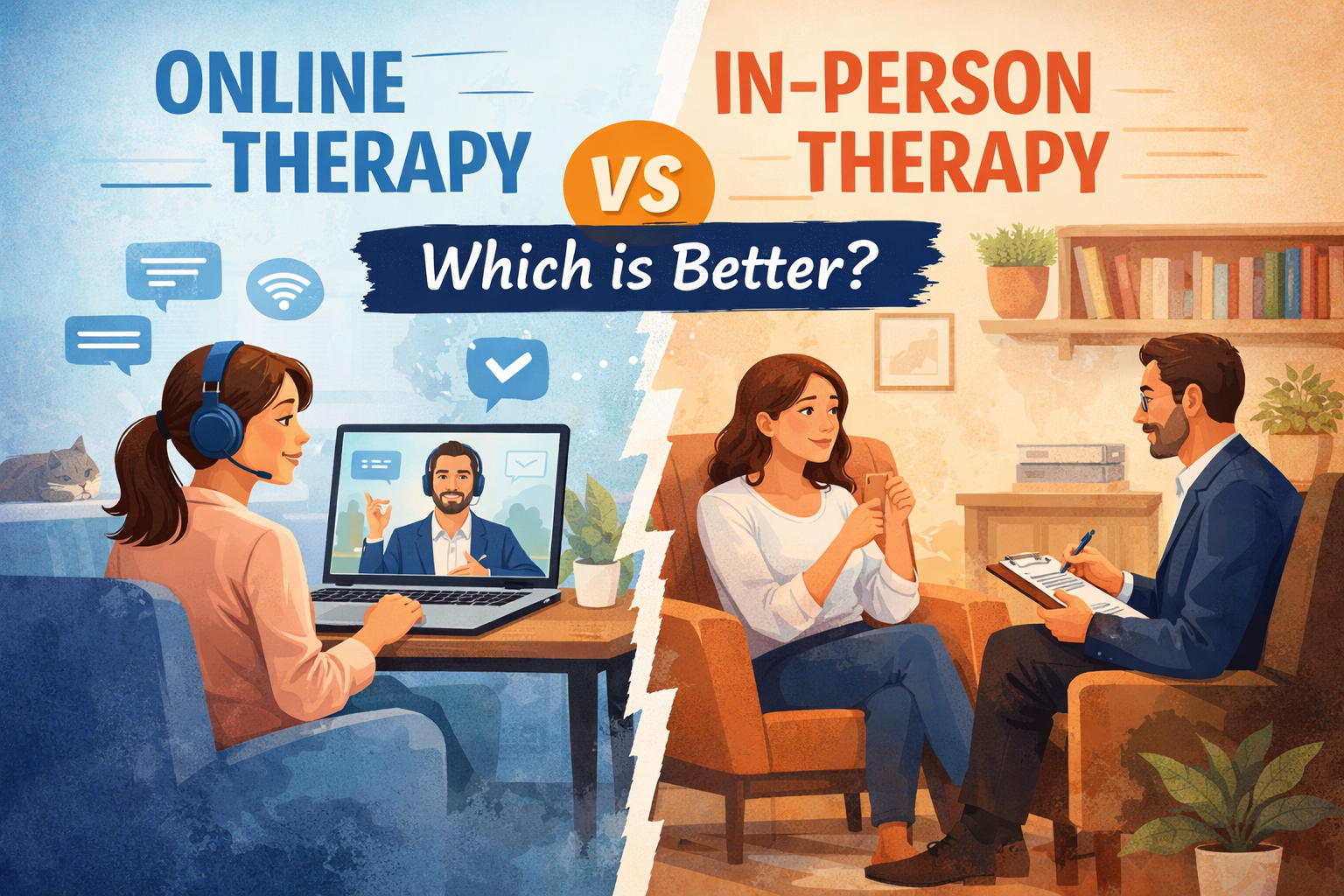
Online Therapy vs In-Person Therapy: Which Is Better in 2026? (Complete Authority Guide)
Mental health care has changed dramatically over the past decade. What once required sitting inside a therapist’s office is now available at the tap of a screen. As more people prioritize emotional well-being, one major question continues to dominate conversations:
Online therapy vs in-person therapy — which is better?
The short answer? It depends on your needs, lifestyle, mental health condition, and personal preference.
The long answer? That’s exactly what this in-depth, research-backed guide will help you understand.
In this comprehensive comparison, we’ll examine effectiveness, cost, privacy, therapeutic connection, accessibility, safety, and long-term outcomes — so you can confidently decide which format works best for you.
Understanding the Modern Therapy Landscape
Therapy is no longer limited to a physical office. Thanks to advancements in telehealth technology, mental health professionals can now deliver high-quality care remotely.
Both online therapy (also known as teletherapy) and in-person therapy are provided by licensed professionals such as:
- Clinical psychologists
- Licensed professional counselors (LPCs)
- Licensed clinical social workers (LCSWs)
- Marriage and family therapists (MFTs)
- Psychiatrists
The core therapeutic techniques — such as Cognitive Behavioral Therapy (CBT), psychodynamic therapy, and trauma-focused therapy — remain the same regardless of format. What changes is the delivery method.
What Is Online Therapy?
Online therapy allows you to connect with a licensed therapist through digital platforms using:
- Video sessions
- Phone calls
- Live chat
- Secure messaging
Sessions are conducted via HIPAA-compliant platforms that protect confidentiality and client privacy.
Why Online Therapy Has Grown So Rapidly
- Increased mental health awareness
- Technological advancement
- Demand for flexible healthcare
- Reduced stigma
- Global events that normalized remote care
For many individuals, online therapy removed barriers that once prevented them from seeking help.
What Is In-Person Therapy?
In-person therapy is the traditional model where you meet face-to-face with your therapist in a private office setting.
Sessions typically last 45–60 minutes and occur weekly. The environment is structured, confidential, and professionally designed to encourage open communication.
This format has decades of clinical validation and remains highly effective for a wide range of mental health conditions.
Online Therapy vs In-Person Therapy: Effectiveness Comparison
Is Online Therapy as Effective?
Multiple clinical studies show that online therapy can be equally effective as in-person therapy for many common conditions, including:
- Generalized anxiety disorder
- Social anxiety
- Depression
- Stress-related disorders
- Relationship challenges
Cognitive Behavioral Therapy (CBT), in particular, translates very well to online formats because it focuses on structured exercises and cognitive reframing techniques.
When In-Person Therapy May Be More Effective
In-person therapy may be better suited for:
- Severe mental illness
- Active suicidal ideation
- Complex trauma (PTSD)
- Psychosis or dissociative disorders
- Cases requiring close monitoring
Therapists can better assess physical cues, agitation, and non-verbal signals in a face-to-face setting.
Authority Insight: Research consistently shows that therapeutic alliance — the bond between therapist and client — is more important than the format itself.
Cost Breakdown: Which Is More Affordable?
Online Therapy Costs
- Often subscription-based
- Lower overhead expenses
- No travel costs
- Flexible pricing models
Average cost per session can be lower compared to traditional therapy, depending on region.
In-Person Therapy Costs
- Higher office overhead
- Transportation expenses
- Parking fees
- Potential time off work
Insurance coverage varies. Some plans cover both formats equally, while others may favor telehealth services.
Verdict: Online therapy tends to be more budget-friendly for most individuals.
Convenience & Accessibility
One of the biggest advantages of online therapy is accessibility.
Online Therapy Accessibility Benefits
- Available in rural or underserved areas
- Accessible for individuals with disabilities
- Ideal for busy professionals
- Eliminates commute time
- Easier scheduling flexibility
For bloggers, entrepreneurs, remote workers, and students with tight schedules, this flexibility can significantly increase therapy consistency.
In-Person Therapy Accessibility Challenges
- Limited provider availability in some regions
- Travel time
- Traffic or transportation barriers
- Weather disruptions
Privacy & Confidentiality Considerations
Online Therapy Privacy
Online platforms use encrypted technology to protect data. However, privacy at home depends on your environment.
If you live with family, roommates, or children, finding a quiet, confidential space may be challenging.
In-Person Therapy Privacy
A therapist’s office provides a neutral, controlled environment specifically designed for confidentiality.
Some individuals feel safer discussing sensitive topics outside their home setting.
Key Insight: Privacy concerns are highly situational and depend on your living arrangement.
Therapeutic Connection & Emotional Depth
Many people wonder whether therapy can feel “real” through a screen.
Advantages of In-Person Emotional Presence
- Full body language observation
- Physical presence enhances bonding
- Less screen fatigue
- Fewer technological interruptions
Online Therapy Connection Strengths
- Clients often feel safer opening up at home
- Reduced social anxiety
- Increased comfort and familiarity
Interestingly, some individuals report deeper vulnerability online because they feel less intimidated.
Technology & Reliability
Online therapy requires:
- Stable internet connection
- Private device access
- Basic digital literacy
Technical glitches can interrupt emotional momentum during sessions.
In-person therapy avoids these issues entirely.
Safety & Crisis Situations
In crisis scenarios, in-person therapy may offer advantages because therapists can respond immediately and assess risk more accurately.
Online therapy platforms typically have emergency protocols, but they may not replace immediate in-person intervention.
If someone is in acute crisis, emergency services should always be prioritized.
Who Should Choose Online Therapy?
- Individuals with mild to moderate anxiety or depression
- Busy professionals
- People living in remote areas
- Those who prefer privacy at home
- Individuals comfortable with technology
Who Should Choose In-Person Therapy?
- Individuals with severe symptoms
- Clients needing structured environments
- People uncomfortable with technology
- Those seeking deeper non-verbal engagement
Hybrid Therapy: A Growing Trend
Many therapists now offer hybrid models combining online and in-person sessions.
This approach provides flexibility while maintaining strong interpersonal connection.
Example structure:
- Monthly in-person sessions
- Bi-weekly virtual check-ins
This balanced approach is becoming increasingly popular in 2026.
Long-Term Outcomes: Does Format Matter?
Research suggests that long-term therapy success depends more on:
- Consistency
- Therapeutic alliance
- Client motivation
- Evidence-based techniques
The format itself is rarely the primary factor in outcomes.
Bottom line: The best therapy is the one you will consistently attend.
How to Decide: A Practical Framework
Ask yourself:
- How severe are my symptoms?
- Do I have privacy at home?
- Can I commit to weekly commuting?
- What does my budget allow?
- Which format feels safer to me?
- What does my insurance cover?
- Do I prefer structure or flexibility?
Final Verdict: Online Therapy vs In-Person Therapy
There is no universal winner.
Online therapy excels in convenience, affordability, and accessibility.
In-person therapy excels in presence, structure, and crisis management.
Your personal circumstances determine which option is better.
The most important step is not choosing perfectly — it’s choosing to begin.
Conclusion: Mental Health Support Has Never Been More Accessible
Whether you choose online therapy, in-person therapy, or a hybrid approach, seeking help is a powerful step toward healing and growth.
In 2026, mental health care is more flexible than ever. You have options — and that’s empowering.
Choose the format that aligns with your lifestyle, comfort, and needs — and commit to the process.
Your mental health is worth the investment.
For more tips on therapy, check our therapy category Therapy category.
Have any thoughts?
Share your reaction or leave a quick response — we’d love to hear what you think!
-
 0
0
-
 0
0
-
 0
0
-
 0
0
-
 0
0
-
 0
0